
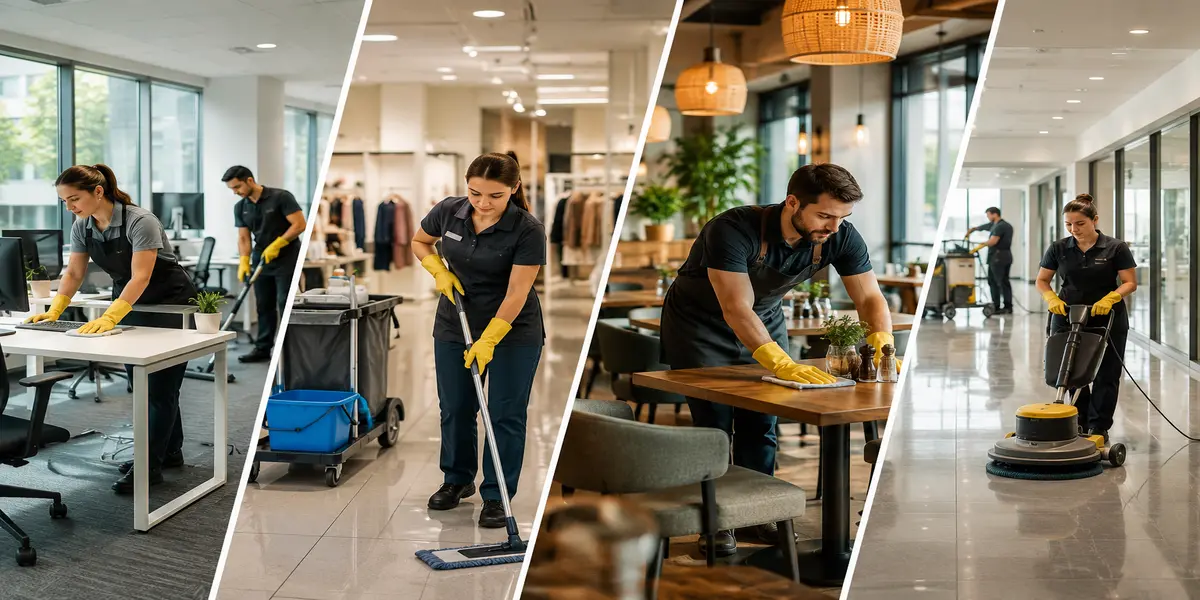
Customised Cleaning Programs For Every Business Type
Every business is unique when it comes to its cleaning needs. An office has different challenges than a restaurant, retail store or warehouse. Cleaning requirements are influenced by the number of customers, hours of operation, type of floor and the activities which take place in the workplace. A normal cleaning routine may be lacking coverage to an area. It can also comprise work not requiring daily attending to. Tailored cleaning schedules enable businesses to schedule the cleaning according to the actual building conditions.
Here on this blog we will introduce you to practical cleaning schedules in various Australian healthcare businesses. We will also describe how to schedule tasks, handle the frequencies and keep a commercial environment clean and consistent.
Table of Contents
Understand Your Business Needs
Recognize elements that affect the cleanliness level at your office before you draw up a cleaning schedule. The number of employees that your organization has and how many consumers enter your place, together with your opening hours and kind of business are key factors that can affect cleanliness. Find spots which dirt gathers more like doorways, kitchens, bathrooms and other walkways which are heavily used. Think about all the surfaces throughout your estate including carpet, tile, glass and stone on floors. Some spaces require cleaning on a daily basis others on a weekly or even less frequent basis. This evaluation enables prioritizing for the business in realistic manner. In hard floors cleaning crews also can direct their time where it is most effective.
| Business factor | What to assess |
| Foot traffic | Busy and low-use areas |
| Operating hours | Suitable cleaning times |
| Surface types | Correct cleaning methods |
| Staff numbers | Workplace usage levels |
| Special areas | Kitchens, bathrooms and storage |
Create Effective Office Cleaning Plans
Image prompt: Professional cleaner maintaining a modern Australian office, clean workstations, reception area, commercial cleaning equipment, natural daylight, realistic photography.
The team responsible for cleaning the office should guarantee cleanliness of the workspace at the same time not causing any disruption to the workers productivity. For example, daily work of a cleaner may consist of tasks like emptying waste bins, disinfecting toilets, wiping off stains from kitchen appliances and vacuuming corridors which are highly trafficked by visitors. Reception areas and meeting rooms are also parts of the cleaning schedule as these spaces are frequently used by clients and visitors. With a well-organized routine office cleaning schedule, a company can ensure its standards remain consistent without allowing the daily cleaning routine to become overwhelming.
Plan Cleaning For Retail Stores
Department stores and supermarkets should carry out cleaning on a regular basis if they want to create and maintain a pleasant and clean shopping environment that will improve the feelings of shoppers. Shoppers will notice the dirt on the floor, the dust on the shelves, the marks on the doors and the fittings in the rest rooms at the very start of their first shopping experience. People coming in on dirty shoes dirty the entrance and adjacent areas so they may get cleaned much more often than others. Some work can be done in the morning, some deep cleaning can be done at night. The timetable should also take account of the store type. Working with a professional cleaning company allows stores to tailor cleaning routines around busy periods, high-traffic areas, and specific maintenance needs.
Manage Hospitality Cleaning Needs
Image prompt: Professional cleaner working inside a modern Australian café, clean dining area, polished floors, hygienic surfaces, realistic commercial photography.
Food service facilities, for example, restaurants and cafes usually clean the area after their working hours and several times during the day at intervals as well. Kitchen counters spills, messes and dirty dishes from customers may all conspire to dirty up an establishment. An adequate regime is required for both front of house and back of house. It helps to note that food preparation areas have a very strict cleaning protocol which is usually based on what kind of surfaces or equipment are being used at a particular moment. Timing is everything in a hospitality setting. Maintenance work can take place in between rushes and deep cleaning may be done after hours.
Maintain Healthcare Cleaning Standards
Healthcare institutions should be cleaned with care as hygiene is a critical aspect of workplace in these areas. They may all have different requirements, medical centres, dentists and care facilities. Waiting areas, reception desks, treatment rooms, rest rooms and staff areas should be evaluated on an individual basis. Depending on the facility’s protocols, high-touch surfaces will require cleaning more frequently. Cleaning agents should be appropriate for the surface and application. There are also relevant Australian workplace and hygiene considerations that businesses need to take into account. A well-defined cleaning schedule can outline the charge and cleaning frequency of each zone. It helps to set expectations too, so the cleaning teams know what they need to deliver on consistently.
Organise Warehouse Cleaning Tasks
Warehouses, industrial facilities and the like are subject to dust, grime, packaging material debris and heavy foot traffic. These factors can contribute to floor care being a high priority. A tailored system can organize the office in zones depending on used and traffic patterns. Docks, aisles and employee areas may require more frequent cleaning than a warehouse. Sweeping and vacuuming in combination with proper floor care are effective in combating routine wear and dirt. Washing around machinery must comply with the workplace rules for safety and the manufacturer’s guidelines. Cleaning should not interfere with the working day’s schedule. A scheduled industrial cleaning process can promote a clean and organized work environment.
| Workplace area | Main priority | Cleaning focus |
| Warehouse floor | Dirt and dust | Sweeping and floor care |
| Loading area | Debris | Frequent cleaning |
| Walkways | Heavy traffic | Regular floor maintenance |
| Staff room | Surfaces and bins | Routine cleaning |
| Storage area | Dust | Scheduled cleaning |
Build A Flexible Cleaning Schedule
If the plan for restaurant cleaning is well developed on one side so that staff can be properly led and but so that it still accommodates the changing nature of day-by-day activities, it will serve its purpose perfectly. The first step is to compile a list of all workplace areas which have to be cleaned. Divide them into daily, weekly , monthly and sporadic tasks. Prioritise areas over traffic and areas where more hygiene is needed. Take into account opening times when deciding when to clean. Managers can use a commercial cleaning checklist to keep track of the work that has been done. Routine evaluations ensure customised cleaning programs remain practical and effective.
Choose The Right Cleaning Partner
Selecting an appropriate cleaning service provider is crucial when you are balancing a custom office cleaning plan. Businesses should specify the size of their premises, their business hours and the level of traffic, along with any specific cleaning concerns. With this knowledge, cleaning crews can get a feel for the workplace before they create a schedule of service. Inquire as to which services are provided and what standards the company has in place for quality of the cleaning. Effective communication reduces the risk of neglected jobs or inappropriate cleaning. Regular feedback also allows the service to change as the business grows.
Conclusion
To clean the workplace, a different approach is needed for each type of business. Different businesses like offices, shops, hotels, hospitals and warehouses have different requirements when it comes to cleaning. A cleaning schedule that is the same for every location might lead to the wrong quantity of work performed at different places. Tailored cleaning schedules enable organisations to schedule cleaning according to the level of traffic, operating hours, type of surfaces and activities carried out in the place of work. Coastal workplaces can benefit from giving extra attention to air conditioner vents, which often act as dust magnets and can affect the overall cleanliness of the space. Companies who understand proper cleaning methods and prepare a sensible cleaning plan have workplaces that are not only clean and healthy but also visually appealing. And they guarantee these features create the least amount of interference, if any to the regular business operations in the place.
Frequently Asked Questions
What are customised cleaning programs?
Customised cleaning programs are cleaning schedules designed around a business’s specific workplace, operating hours and cleaning requirements.
Which businesses need customised cleaning?
Offices, retail stores, restaurants, healthcare facilities and warehouses can all benefit from tailored commercial cleaning programs.
How often should commercial cleaning happen?
Cleaning frequency depends on business type, foot traffic, workplace size and hygiene requirements. Busy areas usually need more frequent attention.
Can cleaning programs change over time?
Yes, Businesses can adjust their cleaning schedules when operating hours, workplace conditions, staffing or cleaning requirements change.