
Clean a Dishwasher with Vinegar: Easy Cleaning Guide
Still using the machine, yet meals keep clinging to dishes? Ever pull out a plate, give it a stare, and notice it looks hazy compared to before it went in? Food, hard water minerals, and dry detergent will accumulate in small pieces over time in the dishwasher. Here’s something useful: white vinegar can clear out those stubborn residues – cheap, common, harmless around household surfaces. Not only does it knock loose gunk near spray arms, but it also cuts odours lingering deep within corners while boosting overall rinse results – all without synthetic additives clouding the process.
Table of Contents
Why Clean Your Dishwasher?
A lot of people don’t realise it at first, but every wash, grime gets into crevices. Grease stays behind, even when everything looked clean. Leftover foam hides near seals where damp lingers too long. Mineral dust gathers on spray arms without anyone seeing. That grime drags down performance bit by bit. When ignored, gunk piles up, hurting parts inside until the machine wears out faster than needed.
Pouring vinegar through a run now and then shows exactly how simple upkeep can keep things running smoothly far into the future. When you are finished, you will be amazed at how easy it is just to do a little dishwasher maintenance, and you will catch your breath as you realise that your dishwasher is now running again. There are lots of common dishwasher issues you can resolve for yourself by examining them closely as you clean your dishwasher.
| Common Dishwasher Issues | Possible Cause |
| Bad odours | Food residue buildup |
| Cloudy dishes | Hard water deposits |
| Poor cleaning results | Grease and detergent buildup |
| Slow drainage | Blocked filter |
| White residue | Mineral accumulation |
Benefits Of Using Vinegar
Cleaning with Vinegar is a well-established method and is one of the most effective natural cleaning products, besides being a natural dishwasher detergent. It will remove grime from your dishwasher, make it work better by helping to reduce greasiness, and is great for killing most odours. Vinegar is an excellent alternative to many other cleaning products and is generally inexpensive, widely found, and does not contain any harmful chemicals.
Some Homeowners believe that vinegar is not only a great environmentally friendly cleaning option, but they are also pretty happy with the support they get and the good results they achieve. When done correctly, vinegar can be a great way to scent your dishwasher, and you may even get a better working dishwasher. For homeowners looking to maintain overall household cleanliness, skilled cleaning professionals can also provide valuable support alongside regular appliance care.
Clear The Dishwasher First
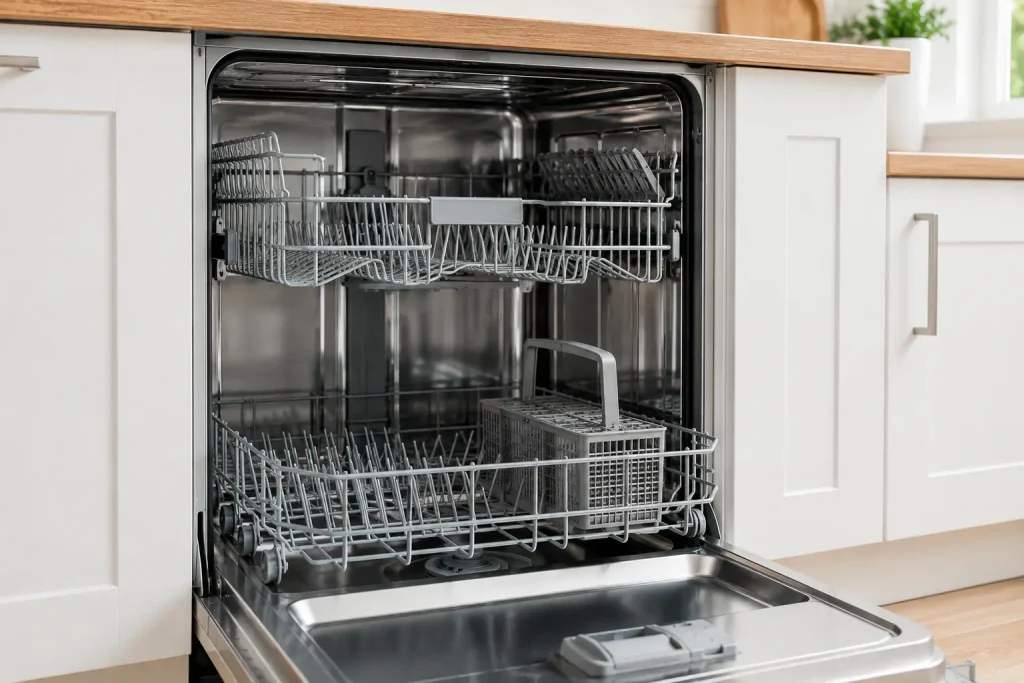
Start by checking that nothing’s left inside – no plates, forks, or anything meant to go through a wash cycle. Look closely at the racks first, then move to the spinning arms and the rubbery edge around the door. Spot where gunk collects; that stuff won’t vanish on its own. After washing away any big pieces of food, operate a cleaning cycle. Preparing the dishwasher takes only a few moments , and it allows the vinegar to work more powerfully. This easy hack is so you can ensure that when you clean a dishwasher with vinegar, it is able to get into every nook and cranny of the dishwasher and clean more effectively.
Run A Vinegar Wash
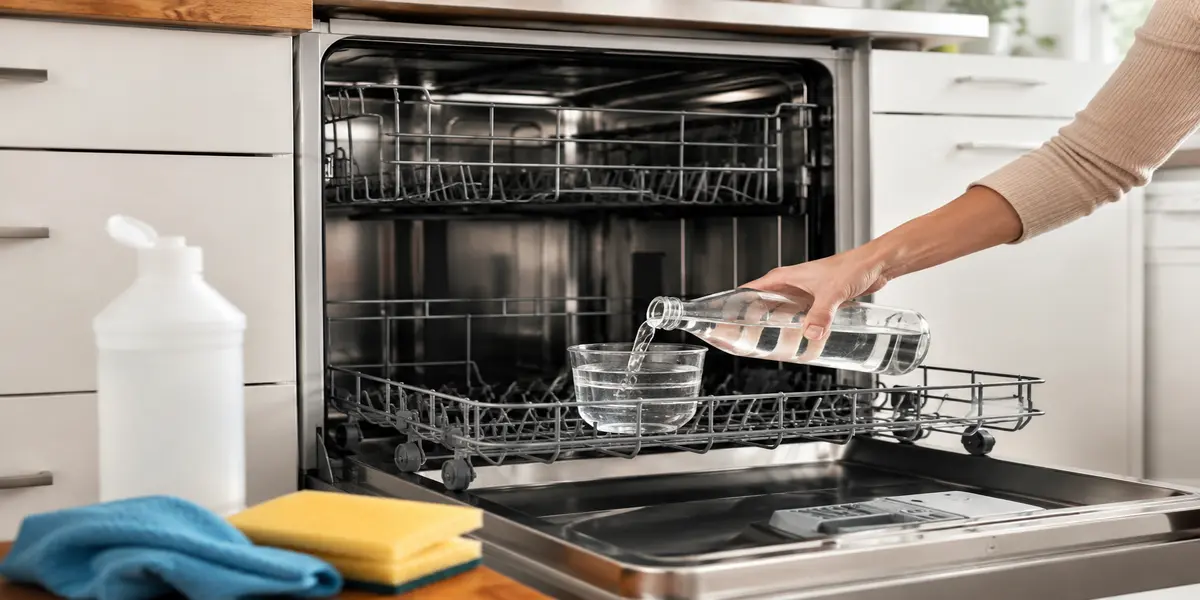
A small glass or dish made safe for dishwashers works best here. Fill it halfway using plain white vinegar before setting it gently on the top shelf inside. Run the machine like normal but skip adding soap entirely during setup. Heat mixes with moisture throughout the cycle while moving liquid around. This mix loosens grime built up over time plus cuts through oily spots left behind slowly. Most households find that doing this once a month works just fine. A fresh scent returns to the machine after using it, while large areas inside get cleaned too.
Vinegar Cleaning Procedures
| Step | Action |
| 1 | Empty the dishwasher |
| 2 | Remove visible debris |
| 3 | Place one cup of white vinegar on the top rack |
| 4 | Run a hot water cycle |
| 5 | Allow the dishwasher to air dry |
| 6 | Inspect for remaining residue |
Clean Filters And Seals
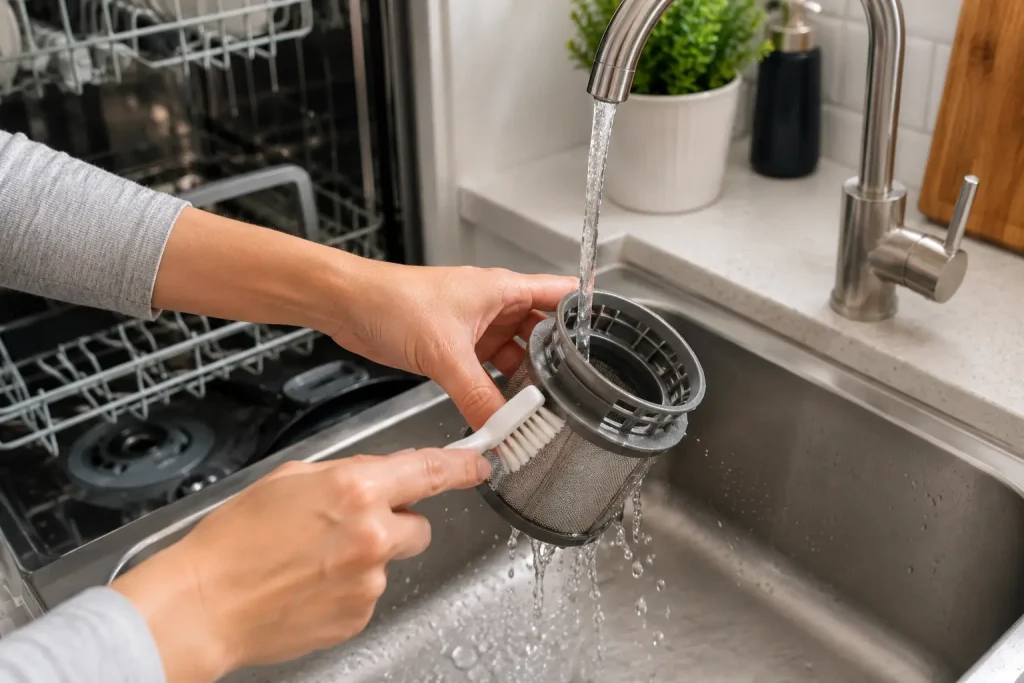
While vinegar can clean most of the interior of the dishwasher, a couple of components require additional cleaning by hand. Food gets caught in and blocks the filters. Sometimes there’s grime, sludge, or mildew stuck in the rubber strips sealing the door. Begin right now – pull the filter free from inside the dishwasher base. Taking off the part means taking begin to clean this part properly.
Remove it from the mud, then get liberal use of warm water until all of the mud is gone. If the dust is gone from the glass, take a towel cleaned with water and white vinegar and wipe along the edges of the opening where the door closes. The soft fabric helps lift sticky buildup without scratching surfaces. When you do all these cleaning steps and employ these tips, you’ll be enjoying a clean and fully functional dishwasher as well .
Remove Hard Water Buildup
Hard water is a typical feature in most areas of Australia and can cause the accumulation of white mineral deposits inside dishwashers. Mineral leftovers might slow down your dishwasher, yet they also spot glasses with a foggy film. Because vinegar carries acetic acid – a substance able to break apart scale – it stands to reason it would assist here. The vinegar continued to work during the rinse cycles too, breaking down the scale, so you should be able to maintain the plates in a bright, clear condition. When additional cleanings are needed, in high-water mineral content areas, additional cleanings are normally necessary.
Avoid Common Mistakes While Cleaning
You can achieve great cleaning results with vinegar, but there are some common mistakes people make when vacuuming that can affect the quality of their clean, but they don’t realise I’m telling you! Piling it on won’t boost performance – instead, expect a sour scent lingering longer than welcome. Just above everything else, mixing vinegar alongside bleach creates fumes that harm lungs fast. Reading the manufacturer’s notes before starting to load your dishwasher is more important than a lot of people realise. Choosing milder substitutes mitigates the dangers, but the freshness and usability are still maintained over time.
Common mistakes include:
- Using excessive amounts of vinegar
- Ignoring the dishwasher filter
- Mixing vinegar with bleach products
- Skipping regular maintenance
- Running cold water cleaning cycles
- Storing food residues inside the machine
Preventing these errors may lead to improved cleaning results as well as longer appliance life.
Create A Monthly Cleaning Routine
You should possess Going to be consistency is key to a well-functioning dishwasher. Don’t wait for bad odors or subpar performance to develop—start a routine maintenance go to your neighbor’s a simple monthly maintenance routine. Cleaning frequently can stop buildup needs for dealing with. Every day, take a moment to tidy up; that way, any problems won’t have time to develop into something larger, regardless of what time of year it is.
Monthly Dishwasher Maintenance Checklist
| Task | Frequency |
| Remove food debris | Weekly |
| Check filter | Weekly |
| Wipe door seals | Fortnightly |
| Run vinegar cleaning cycle | Monthly |
| Inspect spray arms | Monthly |
| Deep clean interior | Every 2–3 months |
Adhering to a service schedule helps with the cleaning and maintenance of your appliance.
Know When To Use Alternatives
However, vinegar does serve a great purpose when it comes to routine cleaning, but there will be times when you need to turn to other cleaning supplies. Fatty deposits located deep within, persistent mould or very heavy limescale deposits may require the application of special dishwasher detergents. But for everyday maintenance, vinegar remains one of the most affordable and effective choices. A lot of people who are happy with their dishwasher use vinegar as the best natural dishwasher cleaner because it works consistently and the results are not that bad. Once your dishwasher is running efficiently again, you may also be surprised to discover dishwasher cleaning items that can help you get even more value from this everyday appliance.
Enjoy Better Dishwasher Performance
Now and then, splash vinegar inside to clear out gunk. A machine free of grime works smarter, not harder. Instead of struggling through cycles, it finishes fast – using less power each time. Grime builds up? A little patching up of trouble as it comes along will save you from headaches down the road. Spot a loose part or odd sound? Tend to it before dinner plates stack up again. Cleaner insides lead to spotless dishes, every round. Fewer yucky smells stick around when care happens often. When grime is removed from the parts, they will have a longer life, but if there’s grime, then the parts in a dishwasher will be affected by this.
Summary
You can clean dishwasher with vinegar. Vinegar is a cheap and helpful way to remove grime as well as bad smells and mineral deposits. A once beloved, trusted natural dishwasher cleaner that was being phased out; it now doubles as a sustainable, green alternative to many household cleaners — and helps you keep your appliances performing at their best.
A little bit of up-front weekly maintenance, keeping an eye on your filters and tackling buildup before it becomes an issue, can make that chore a lot less tedious and also prevent you from having to deal with stinky smells in your dishwasher, helping ensure that it’s ready to go come the next day. Some routine maintenance can extend the life of one of the hardest-working appliances in your kitchen.